
For more details on the Modalities of Knowledge Control of the first year of L1in2years, download the file "MCC on Ametice-1" at the bottom of this page
-
L1 in 2 years - Portail Marie Curie : first year
Semester 1
- Discovery of mentions 1 :
- Towards the molecule 1/2
- Automatic
- Optics 1/2
- Atom and chemical bond 1/2
- Electricity 1 1/2
- Mathematics: methods and calculations 1/2
- English 1/3
- Methodology 1/2
Semester 2
- Discovery of the mentions 2 :
- Towards the molecule 2/2
- Optics 2/2
- Atom and chemical bond 2/2
- Electricity 1 2/2
- Mathematics: methods and calculations 2/2
- English 2/3
- Mechanics
- Personal and Professional Student Project 1/2
- Discovery of mentions 1 :
-
L1 in 2 years - Portail Marie Curie : second year
Semester 3
- Computer Science
- English 3/3
- Mathematics 2 1/2
- Mechanics and statics of systems 1/2
- Methodology 2/2
- Chemistry of solutions 1/2
- Thermodynamics 1/2
Semester 4
- Mathematics 2 2/2
- Mechanics and statics of systems 2/2
- Solution Chemistry 2/2
- Thermodynamics 2/2
- Personal and Professional Student Project 2/2
- Options Course
- Physics
- Chemistry
- SPI
- PES options for further study
- Mathematics
- Physics
- Chemistry
- internship
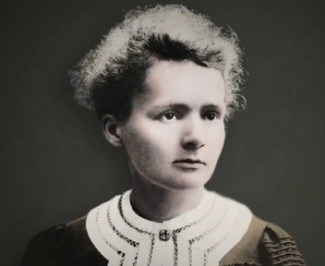
Life is not easy for any of us. But what, you have to have perseverance, and especially self-confidence. You have to believe that you are good at something, and that you have to achieve it at all costs.
Marie Curie
Description
-
Atom and chemical bond
This course follows on from the "Atom and chemical bonds" course. After an introduction devoted to the usefulness of chemistry in everyday life, the structure of molecules will be studied through two complementary points of view: geometric and electronic. Then, in order to use the same "language" to describe molecules, several modes of representation will be introduced. Finally, the notion of planar isomerism will be described allowing a coherent sequence with the students who will choose the optional UE "Molecular Architecture" in S2.
- Responsible of the UE : Vincent LEDENTU
- Modalities of the Control of Knowledge : Final grade = (Continuous control spread over the semester + Partial (1h30) + Final exam (1h30))/3
-
Atom and chemical bond
This course follows on from the "Atom and chemical bonds" course. After an introduction devoted to the usefulness of chemistry in everyday life, the structure of molecules will be studied through two complementary points of view: geometric and electronic. Then, in order to use the same "language" to describe molecules, several modes of representation will be introduced. Finally, the notion of planar isomerism will be described allowing a coherent sequence with the students who will choose the optional UE "Molecular Architecture" in S2.
-
Atom and chemical bond
This course follows on from the "Atom and chemical bonds" course. After an introduction devoted to the usefulness of chemistry in everyday life, the structure of molecules will be studied through two complementary points of view: geometric and electronic. Then, in order to use the same "language" to describe molecules, several modes of representation will be introduced. Finally, the notion of planar isomerism will be described allowing a coherent sequence with the students who will choose the optional UE "Molecular Architecture" in S2.
-
Atom and chemical bond
This course follows on from the "Atom and chemical bonds" course. After an introduction devoted to the usefulness of chemistry in everyday life, the structure of molecules will be studied through two complementary points of view: geometric and electronic. Then, in order to use the same "language" to describe molecules, several modes of representation will be introduced. Finally, the notion of planar isomerism will be described allowing a coherent sequence with the students who will choose the optional UE "Molecular Architecture" in S2.
- Responsible of the UE : Vincent LEDENTU
- Modalities of the Control of Knowledge : Final grade = (Continuous control spread over the semester + Partial (1h30) + Final exam (1h30))/3
-
Atom and chemical bond
This course follows on from the "Atom and chemical bonds" course. After an introduction devoted to the usefulness of chemistry in everyday life, the structure of molecules will be studied through two complementary points of view: geometric and electronic. Then, in order to use the same "language" to describe molecules, several modes of representation will be introduced. Finally, the notion of planar isomerism will be described allowing a coherent sequence with the students who will choose the optional UE "Molecular Architecture" in S2.
-
Atom and chemical bond
This course follows on from the "Atom and chemical bonds" course. After an introduction devoted to the usefulness of chemistry in everyday life, the structure of molecules will be studied through two complementary points of view: geometric and electronic. Then, in order to use the same "language" to describe molecules, several modes of representation will be introduced. Finally, the notion of planar isomerism will be described allowing a coherent sequence with the students who will choose the optional UE "Molecular Architecture" in S2.
- Responsible of the UE : Vincent LEDENTU
- Modalities of the Control of Knowledge : Final grade = (Continuous control spread over the semester + Partial (1h30) + Final exam (1h30))/3
-
Atom and chemical bond
This course follows on from the "Atom and chemical bonds" course. After an introduction devoted to the usefulness of chemistry in everyday life, the structure of molecules will be studied through two complementary points of view: geometric and electronic. Then, in order to use the same "language" to describe molecules, several modes of representation will be introduced. Finally, the notion of planar isomerism will be described allowing a coherent sequence with the students who will choose the optional UE "Molecular Architecture" in S2.
- Responsible of the UE : Vincent LEDENTU
- Modalities of the Control of Knowledge : Final grade = (Continuous control spread over the semester + Partial (1h30) + Final exam (1h30))/3
-
Atom and chemical bond
This course follows on from the "Atom and chemical bonds" course. After an introduction devoted to the usefulness of chemistry in everyday life, the structure of molecules will be studied through two complementary points of view: geometric and electronic. Then, in order to use the same "language" to describe molecules, several modes of representation will be introduced. Finally, the notion of planar isomerism will be described allowing a coherent sequence with the students who will choose the optional UE "Molecular Architecture" in S2.
- Responsible of the UE : Vincent LEDENTU
- Modalities of the Control of Knowledge : Final grade = (Continuous control spread over the semester + Partial (1h30) + Final exam (1h30))/3
-
Atom and chemical bond
This course follows on from the "Atom and chemical bonds" course. After an introduction devoted to the usefulness of chemistry in everyday life, the structure of molecules will be studied through two complementary points of view: geometric and electronic. Then, in order to use the same "language" to describe molecules, several modes of representation will be introduced. Finally, the notion of planar isomerism will be described allowing a coherent sequence with the students who will choose the optional UE "Molecular Architecture" in S2.
- Responsible of the UE : Vincent LEDENTU
- Modalities of the Control of Knowledge : Final grade = (Continuous control spread over the semester + Partial (1h30) + Final exam (1h30))/3
-
Atom and chemical bond
This course follows on from the "Atom and chemical bonds" course. After an introduction devoted to the usefulness of chemistry in everyday life, the structure of molecules will be studied through two complementary points of view: geometric and electronic. Then, in order to use the same "language" to describe molecules, several modes of representation will be introduced. Finally, the notion of planar isomerism will be described allowing a coherent sequence with the students who will choose the optional UE "Molecular Architecture" in S2.
-
Atom and chemical bond
This course follows on from the "Atom and chemical bonds" course. After an introduction devoted to the usefulness of chemistry in everyday life, the structure of molecules will be studied through two complementary points of view: geometric and electronic. Then, in order to use the same "language" to describe molecules, several modes of representation will be introduced. Finally, the notion of planar isomerism will be described allowing a coherent sequence with the students who will choose the optional UE "Molecular Architecture" in S2.
-
Atom and chemical bond
This course follows on from the "Atom and chemical bonds" course. After an introduction devoted to the usefulness of chemistry in everyday life, the structure of molecules will be studied through two complementary points of view: geometric and electronic. Then, in order to use the same "language" to describe molecules, several modes of representation will be introduced. Finally, the notion of planar isomerism will be described allowing a coherent sequence with the students who will choose the optional UE "Molecular Architecture" in S2.
- Responsible of the UE : Vincent LEDENTU
- Modalities of the Control of Knowledge : Final grade = (Continuous control spread over the semester + Partial (1h30) + Final exam (1h30))/3
-
Atom and chemical bond
This course follows on from the "Atom and chemical bonds" course. After an introduction devoted to the usefulness of chemistry in everyday life, the structure of molecules will be studied through two complementary points of view: geometric and electronic. Then, in order to use the same "language" to describe molecules, several modes of representation will be introduced. Finally, the notion of planar isomerism will be described allowing a coherent sequence with the students who will choose the optional UE "Molecular Architecture" in S2.
-
Atom and chemical bond
This course follows on from the "Atom and chemical bonds" course. After an introduction devoted to the usefulness of chemistry in everyday life, the structure of molecules will be studied through two complementary points of view: geometric and electronic. Then, in order to use the same "language" to describe molecules, several modes of representation will be introduced. Finally, the notion of planar isomerism will be described allowing a coherent sequence with the students who will choose the optional UE "Molecular Architecture" in S2.
-
Atom and chemical bond
This course follows on from the "Atom and chemical bonds" course. After an introduction devoted to the usefulness of chemistry in everyday life, the structure of molecules will be studied through two complementary points of view: geometric and electronic. Then, in order to use the same "language" to describe molecules, several modes of representation will be introduced. Finally, the notion of planar isomerism will be described allowing a coherent sequence with the students who will choose the optional UE "Molecular Architecture" in S2.
-
Atom and chemical bond
This course follows on from the "Atom and chemical bonds" course. After an introduction devoted to the usefulness of chemistry in everyday life, the structure of molecules will be studied through two complementary points of view: geometric and electronic. Then, in order to use the same "language" to describe molecules, several modes of representation will be introduced. Finally, the notion of planar isomerism will be described allowing a coherent sequence with the students who will choose the optional UE "Molecular Architecture" in S2.
-
Atom and chemical bond
This course follows on from the "Atom and chemical bonds" course. After an introduction devoted to the usefulness of chemistry in everyday life, the structure of molecules will be studied through two complementary points of view: geometric and electronic. Then, in order to use the same "language" to describe molecules, several modes of representation will be introduced. Finally, the notion of planar isomerism will be described allowing a coherent sequence with the students who will choose the optional UE "Molecular Architecture" in S2.
-
Atom and chemical bond
This course follows on from the "Atom and chemical bonds" course. After an introduction devoted to the usefulness of chemistry in everyday life, the structure of molecules will be studied through two complementary points of view: geometric and electronic. Then, in order to use the same "language" to describe molecules, several modes of representation will be introduced. Finally, the notion of planar isomerism will be described allowing a coherent sequence with the students who will choose the optional UE "Molecular Architecture" in S2.
