

SATIS in figures:
- 140 students12
- administrative/technical staff10
- lecturers (including 1 PAST)
The SATIS Department is located in Aubagne, on a 2300 m2 site, including a brand-new 700 m2 building with state-of-the-art equipment.
The new building houses all the tools required for post-production (image, sound, music).
It contains 11 film editing booths, 11 sound/music editing booths, a sound stage, a music mixing room, two 7.1 mixing auditoriums (pre-equipped with Dolby Atmos), nodes...
-
Training courses
-
Candidature
-
Department organization
-
Student life
-
Gallery
-
Formations courtes
-
Search
-
Companies/Internships
-
License
-
Masters
-
Continuing education
The Bachelor's degree and Master's degrees in Arts and Techniques of Image and Sound are available for continuing education.
Registrations
Skills
Professions
-
Informations scolarité et choix de parcours
Scolarité
La formation au Département SATIS est une formation à temps plein qui nécessite une assiduité quotidienne. Le volume horaire hebdomadaire moyen est de 30 heures de cours, TD ou TP obligatoires.
Pendant les périodes de réalisation des films, les emplois du temps sont adaptés à la conduite et aux nécessités des projets (travail le soir et le week-end par exemple).Les modalités d’évaluation reposent en grande partie sur le contrôle continu. Un travail personnel en dehors des heures de cours est demandé à l’étudiant, qui participe par ailleurs à la vie de l’établissement (association des étudiants, conseil étudiants …).
Les stages sont obligatoires : 1 mois en L3 et 6 mois pour le Master.
Parcours
La définition et le contenu des parcours proposés aux étudiants reposent sur le bilan de plusieurs années de formation du Département SATIS, l’examen des parcours professionnels de nos anciens étudiants et l’analyse des réalités économiques du secteur du cinéma et de l’audiovisuel.
Les différents parcours proposés sont :
- Montage et post production (effectif: 10 étudiants)
- Prise de vue (effectif: 10 étudiants)
- Production et métiers de la réalisation (effectif: 12 étudiants)
- Son à l’image (effectif: 10 étudiants)
- Musique pour l'image (effectif: 5 étudiants en L3 et 10 étudiants en master)
En L3, la formation permet à l’étudiant de confirmer un choix d’orientation : Master ou insertion professionnelle.
Il est nécessaire de vous positionner sur un parcours quelque soit le niveau d'études demandé. -
Comment se passe le recrutement ?
Le recrutement se déroule en trois phases :
1. Inscription dématérialisée pour tous les candidats (FI et FC) sur la plateforme ad hoc. Pour exemple, voir en bas de page, le sujet imposé de la réalisation audiovisuelle de l'année précédente.
2. À l’issue de l’étude des dossiers par le jury une admissibilité est prononcée.
3. Épreuve écrite : QCM Ces questions porteront, par spécialité, sur les métiers, les techniques et plus généralement sur la culture artistique et scientifique. Pour exemple, voir en bas de page, Annales QCM.
Épreuve orale : Le candidat a 10 minutes pour se présenter. Le jury, constitué par spécialité et composé du responsable de la filière et d’un enseignant, a 10 minutes pour questionner le candidat. À l’initiative du jury, le candidat pourra être reçu par un second jury.
Les entretiens et QCM se dérouleront à Aubagne.
L'admission définitive est prononcée mi-juin pour les M1 et mi-juillet pour les L3 et M2.
L’intégration en Licence et en Master est assujettie à la décision de la Commission Pédagogique sur la base de l’évaluation du jury.
Ces diplômes sont accessibles en formation continue et par la Validation des Acquis de l’Expérience (VAE) ou la Validation des Acquis Professionnels (VAP).
-
Comment postuler ?
Pour postuler en L3 Sciences et Technologies (SATIS) ou en M2 Cinéma et audiovisuel vous devez candidater via la plateforme e-candidat
Pour postuler en M1 Cinéma et audiovisuel vous devez candidater via la plateforme monmasterATTENTION, si vous souhaitez postuler en M1 ET L3, vous devez déposer un dossier de candidature sur les deux plateformes (monmaster ET e-candidat). La réalisation que vous déposerez dans ce cas – et dans ce cas seulement – pour votre candidature L3 sera la même que celle de votre candidature M1.
-
Quels sont les prérequis ?
-
Première année - Licence Sciences et Technologies - Parcours SATIS (L3 UNIQUEMENT)
Licence 2 validée ou diplôme requis : BTS, DUT, CPGE, DMA ou DNAP.
-
Deuxième année - Master 1 Cinéma et audiovisuel
Licence Sciences et Technologies-Parcours SATIS, Licence, DCG ou DNAT.
Licence Pro (uniquement avec une lettre de recommandation rédigée par le responsable de la Licence Pro et mentionnant le classement du candidat)
Le candidat devra attester d'une expérience professionnelle, d'au moins un mois, dans la spécialité choisie (convention de stage et rapport de mission)-
Troisième année - Master 2 Cinéma et audiovisuel
Pour les 5 parcours :
• Production et Métiers de la Réalisation
• Ingénierie de l'Image et de la Prise de Vue
• Ingénierie du Montage et de la Post-Production
• Ingénierie du Son à l'Image
• Métiers de la Musique pour l'Image
Master 1 Cinéma et audiovisuel, Master 1, DNSEP, DSAA, DSCG.
Le candidat devra attester d'une expérience professionnelle, d'au moins deux mois, dans le domaine de la spécialité (convention de stage et rapport de mission) -
-
Calendrier de recrutement
CALENDRIERS 2024
Pour candidater en M1 Pour candidater en L3 ou M2 Plateforme mon master e-candidat Ouverture des voeux 26 février 2024 4 avril 2024 Publication du sujet imposé
réalisation audiovisuelle26 février 2024 8 avril 2024 Clôture des voeux 24 mars 2024 6 mai 2024 Clôture dépôt des
pièces justificatives24 mars 2024 9 mai 2024 ATTENTION, si vous souhaitez postuler en M1 et L3, vous devez déposer un dossier de candidature sur les deux plateformes (monmaster ET e-candidat). La réalisation que vous déposerez dans ce cas – et dans ce cas seulement – pour votre candidature L3 sera la même que celle de votre candidature M1.
Pour les candidats qui ont postulé sur Etudes en France, vous devez nous contacter par mail, a compter du 26 février 2024, pour recevoir le sujet imposé de la réalisation. Vous avez jusqu'au 24 mars 2024 pour nous renvoyer la réalisation et sa note d'intention.
Documents utiles
-
Formation continue
Vous relevez de la formation continue si vous remplissez l’une des conditions suivantes au début de la formation :
- Vous avez interrompu vos études
- Vous étiez précédemment inscrit en formation continue
- Vous êtes inscrit à Pôle Emploi
- Votre formation est prise en charge par un tiers (OPCA, Fongecif, CPF, DIF, etc…)
- Vous êtes salarié ou profession libérale
Contactez le Service Formation Continue de l’UFR Sciences (Contacts Campus Saint Charles) pour vos démarches administratives
-
Pour les étudiants étrangers
Pour les candidats étrangers, le niveau minimum en français requis est C1 (Utilisateur expérimenté - niveau autonome)
-
Editorial
The SATIS Department (Sciences Arts et Techniques de l'Image et du Son) of the Faculty of Science at the University of Aix-Marseille is turning a corner. After more than 30 years in Aubagne, a new building, new equipment and a refurbished site are giving the course fresh impetus and taking it to the next level.
It was in 1989 that the first Maîtrise de Sciences et Techniques d'Image et de Son diploma was awarded. Today, we offer training at Bachelor's level (Licence Sciences et Technologies) and Master's level (Master Cinéma et Audiovisuel).Since its inception, the program has continued to evolve, grow and structure itself, reaching maturity a few years ago. Today, a large, experienced team of more than 20 people (not including professional lecturers) is in place, an ambitious project has been developed, significant resources have been allocated to training and top-level equipment has been installed.
A number of essential principles and choices have been asserted and form the basis of the SATIS teaching philosophy:
- The pedagogical approach combines theoretical teaching (in the humanities, the arts and the basic sciences) and professional practice within concrete applications and realization projects.
- Students from a wide range of disciplinary backgrounds are admitted.
- An innovative system of individual support helps students to integrate into the world of work by combining the knowledge they have acquired, the work they do on their dissertation and their internships.
Today, our university department is continuing to develop its structure, and has set up an alumni association to formalize a real network for the more than 1,500 students who have taken this course.
Today, SATIS asserts its school spirit, in direct contact with reality, fundamentally interested in the question of professions and their evolution. But this focus also goes hand in hand with the need to provide students, the future professionals, with a real aptitude for communicating with their environment, an open-mindedness and a demand for quality underpinned by solid cultural references.
SATIS, as a Master's-level university course (and even a doctorate for a very limited number of students), provides students with the skills and know-how, as well as the interpersonal skills, to keep pace with an ever-changing world.
-
Teaching team
The teaching team is made up of academics and professionals.
First name Last nameStatusTaught subjectsRémi ADJIMANUniversity lecturerSoundRosine BENARDLecturerMontageNatacha CYRULNIKUniversity lecturerDocumentary productionJavier ELIPE GIMENOMecturer lecturerMusical composition for imagesAlexandre ESCARGUELLecturer UFR SciencesWave physicsDavid GOLDIECertifiedEnglishStéphanie GOLDIECertifiedEnglishAntoine GONOTLecturerSignal , Digital image and sound, AnatomopsychologyPierre PINAUDProfesseur associéDirection , Scénario, Mise en scèneIsabelle RENUCCICertifiéeInsertion professionnelleIsabelle SINGERMaître de conférencesAnalyse filmique, Histoire du cinéma, Prise de vue -
Administrative team
-
Technical team
First name NAMEFunctionTelephoneAntoine BUFFEL DU VAURELogistics officer04 .12.23.10.45Frédéric CELLYImage coordinator04 .12.23.10.43Marianne CHARBONNIERProduction coordinator04 .12.23.10.42Richard FAGESLogistics manager04 .12.23.10.44Daniel LANGARICACoordinator post-prod sound & music Carla LAUZIERCoordinator editing04 .12.23.10.46Félix LE BECCoordinator sound recording04 .12.23.10.47Zoé LE BECMagasinière04 .12.23.10.59 -
Professional speakers
First name Last name Position Frédéric BIELLE Sound engineer Rémi DUMAS Editor Enguerrand DUMONT Camera operator Victor EDE Producer Cyrielle FAURE Editor Florent FOURNIER Sound post-production Julien GROSSI Casting director Gaëlle GUILLERMIN Editor Elory HUMEZ Sound engineer Romain HUONNIC Sound engineer Sabine JOUVE Lawyer Teddy LAROUTIS Assistant director Antonio MAGLIANO Producer Véronique POLTZ Music teacher Lionel PONS Music teacher Aurélie TESSIER Production assistant Jean-Christophe VICTOR Writer-director -
Equipment
-
Partners
The SATIS department maintains privileged relations with a number of organizations
- GMEM* Center for Musical Creation
- Aubagne Conservatory
- Conservatoire National à Rayonnement Régional de Marseille* (National Regional Conservatory of Marseille)
- ERACM, Ecole Régionale d'Acteurs de Cannes et Marseille* (Actors' Regional School of Cannes and Marseille)
- Aubagne International Film Festival
- France 3 Méditerranée
- Méridiens
- Région SUD
- Réplique (La) (Collective of professional actors)
- Semaine du Son (La)
- SIRAR (Site Régional d'Aide à la Réalisation)
- Théâtre National de la Criée
- City of Aubagne
- Zinc, Center for digital arts and culture
* partnership in progress
-
Documentation/BU
The SATIS department's document resource center is part of the University of Aix-Marseille's BU network.
Access conditions
- Loan after registration on presentation of student card
- Free on-site consultation
Opening hours- Monday 9am-12.15pm and 1pm-4pm
- Tuesday 9am-12.15pm and 1pm-3pm
- Wednesday 9h-12h15 and 13h-17h30
- Thursday 9h-12h15 and 13h-15h
Contact
Marta Talacha Spicuglia :marta.talacha-spicuglia@univ-amu.fr
04 13 55 18 92At your service!
At the library you'll find books, DVDs (fiction and documentaries, experimental cinema, world cinema), audio CDs (film music, contemporary music...), magazines and alumni memoirs.
6 computer workstations with free Internet access.
Bibliography-Filmography:Other resource sites
- The SUDOC catalog (Système Universitaire de Documentation) is the French collective catalog produced by libraries and documentation centers in higher education and research.
- Aubagne media library
- Marseille library network
- The Cinémathèque française provides access to Cinéressources, the collective catalog of film libraries and archives.
- Library bookmarks : an organized selection of websites
-
SATIS ALUMNI
Keep in touch and benefit from a real network by joining SATIS ALUMNI, the SATIS alumni association.
-
Association
SATIS FACTION is the student association of the SATIS Department.
-
Aides étudiantes
Lutte contre la précarité étudiante
-
Objectif principal
Intervenir afin d'améliorer la situation des étudiants les plus précaires.
-
Quelles sont les missions ?
Identifier, repérer les étudiants fragiles par des permanences régulières au cœur des campus.
Accompagnement global et personnalisé de l'étudiant sur toutes difficultés sociales : accès aux droits, au logement...
Orienter vers les partenaires internes (CROUS) et externes selon l'évaluation.
Informer sur les dispositifs de soutien existants (aides financières, psy...)
-
-
Student projects
Over the three years of study, students are encouraged to experiment with different types of audiovisual production.
Sound fiction
License 3 - Semester 1 - 15 sound dramas per year
Production of a sound fiction between 3 and 5 minutes. First experience of scriptwriting, directing, sound recording and sound editing. Free subject matter.FIFA WebTV
Licence 3 - Semester 2 - 6 episodes per year
Production of the Aubagne International Film Festival WebTV. Fiction, interview, report, zapping....Photographic Stories
Licence 3 - Semester 2 - 47 photo stories per year
A personal creation, the photo story is a short 3-minute narrative made up of photographs and sound. Free subject matter.Film fictions
Master 1 - Semester 1 - 5 films per year
Shot in Super 16 over the course of a day in a maximum of 8 shots (240 m of film) from scripts adapted as part of a writing workshop. Sound is recorded on analog media.Experimental Cinema
Master 1 - Semester 2 - 24 films per year
Production, in pairs, of an experimental film lasting no more than 3 minutes. Choice of medium and subject.Science documentaries
Master 1 - Semester 2 - 5 films per year
Scientific documentaries made in collaboration with an Aix-Marseille University research laboratory. 13 minutes on set subjects.Final year films
Master 2 - Semester 1 - 3 films per year
Fiction or documentary films. Free subject matter. Running time approx. 20 minutes.Ciné Concert
Master - 1 ciné-concert per year
Screening of final-year films in the form of ciné-concert and the Regards Croisés workshop (meeting of international film music schools) organized as part of the Aubagne International Film Festival.
At Comedia (Aubagne) and Théâtre national de La Criée (Marseille).
In partnership with Conservatoire d'Aubagne and CNRR Pierre Barbizet (Marseille) -
Student briefs
Prism
PRISM (Perception, Représentations, Image, Son, Musique) is an interdisciplinary laboratory under the auspices of the CNRS, Aix-Marseille University and the French Ministry of Culture, bringing together researchers, teacher-researchers and artist-researchers specializing in the fields of image, sound and music. PRISM fosters interdisciplinarity around questions of perception, representations and their uses. The combination of fundamental sciences, human sciences and artistic creation (music, cinema, sound and visual arts) that lies at the heart of PRISM's scientific project enables us to address these issues by integrating various disciplines from the fields of physics and signal processing, art and aesthetic sciences, medicine and neuroscience. Image, sound and music are studied as manipulable and measurable research objects, but also as artistic practices capable of transforming reality and its discourses. The scientific challenge of PRISM is to reveal how the audible, the visible and their interactions generate new forms of sensitive and/or formal representation of the contemporary world.

-
Advanced Training Council
SATIS has set itself the goal of creating an Improvement Council for each diploma.
The Conseil de perfectionnement is a forum for dialogue, responsible for, among other things :
- informing the teaching team about the current and prospective employment situation in the field covered by the diploma(s) or those for which it prepares students,
- facilitate communication between the diploma supervisor(s) and the economic or associative fabric concerned by graduates, in particular through specific media,
- help set up a skills-based approach and participate in the creation of the diploma's training repository.
It contributes to the continuous improvement of training.
The Development Committee is made up of the head(s) of the diploma(s), representatives of the teaching staff, student representatives and members from outside the university with an interest in the field covered by the diploma.
Professionals
- Renaud Barbier: Musician
- Fédéric Bielle: Sound engineer
- Alexandre Cornu: Producer
- Jacques Hubinet: Producer
- Bernard Sasia: Chief Editor
- Jean-Louis Vialard: Cinematographer
Institutional
- Chantal Fischer: PACA Region
- Mireille Maurice: INA Méditerranée
- Gaëlle Rodeville: Aubagne International Film Festival
-
Apprenticeship tax
Why not choose the SATIS department of the UFR Sciences?
The courses offered by SATIS are eligible for the Taxe d'apprentissage.
Along with training, professional integration is one of the University's fundamental missions. Our ambition is to enhance the skills of our students, who are the future professionals of the business world.
The apprenticeship tax is a significant means of ensuring this development.
Invest in your future skills!
- SUPPORT US: From May 27, 2024, you can direct your apprenticeship tax to us via the new national SOLTEA platform!
This step is essential to target our School:
SATIS Department - UAI CODE
- 0133768FORM
US
- of your forthcoming payment by e-mail to Elise Perret, specifying the amount paid and your SIRET number.
This will enable us to trace more quickly the sums paid to our school among those sent to the many faculties and schools of Aix-Marseille University.
-
Courses
As part of their studies, students are required to complete internships.
All internships are subject to a binding agreement between the student, you and our training establishment.Internship periods:
- L3: June-July-August
- M1: January-February-July-August
- M2: April-May-June-July-August-September
All students are eligible for the vacation periods (Christmas, Winter and Spring).
If you are looking for an intern, please send your offer to Isabelle RENUCCI: isabelle.renucci@univ-amu.fr
Contact
SATIS Department
Faculty of Science
University of Aix-Marseille
9, bd Lakanal 13400 AUBAGNE
Open Monday to Friday, 8:30am to 12:00pm and 1:30pm to 5:00pm
News
-
Motion on Differentiated Rights May 26, 2026  May 26, 2026
Motion on Differentiated Rights
The UFR Council of the Faculty of Sciences at AMU, meeting on Friday, May 22, 2026, took a stand against the differential tuition fees sought from non-EU students and unanimously approved the text drafted by the Conferen […]Read more -
Science and society 14/03/2025  14/03/2025
Science and society
Discover our new page dedicated to the place of science in society and parity in science. Through articles, podcasts and more, explore these essential topics that shape our world.Read more -
Dates of trade fairs and open days 01/09/2023 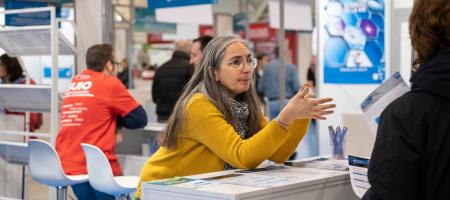 01/09/2023
Dates of trade fairs and open days
Come and talk to the teachers and students of the Faculty of Science!Read more -
Faites de la Science Competition 19/12/2022  19/12/2022
Faites de la Science Competition
The Faculty of Sciences of Aix-Marseille University and the scientific culture unit of Aix-Marseille University organize on Thursday April 13, 2023 the academic stage of the national competition "Faites de la Science".Read more -
Clone of Nobel Day 26/02/2025  26/02/2025
Clone of Nobel Day
On Monday April 28, Aix-Marseille Université's Faculty of Science is organizing Nobel Day, with the exceptional presence of Anne L'Huillier, Professor at the University of Lund (Sweden), winner of the 2023 Nobel Prize in […]Read more


