

WHERE TO MEET US
Where to meet us? |
Open Day |
Salon de l'Étudiant Marseille |
Salon des Masters amU |
Virtual Open Day |
When? |
February 1, 2025
|
January 17 and 18, 2025
|
January 25th 2025
|
March 11, 2025
|
Where? |
In Aubagne, at Satis, 9 Bd Lakanal, 13400 Aubagne |
In Marseille, at Parc Chanot, 114 Rdpt du Prado, 13008 Marseille |
In Marseille, at the Grand Hall Timone, 27 Bd Jean Moulin, 13005 Marseille |
Via Zoom |
-
Training
-
Application
-
School organization
-
Student life
-
Student projects
-
Short courses
-
Search
-
Companies/Internships
La formation proposée à la Satis dure trois ans et est sanctionnée par un diplôme de licence – à la fin de la première année – et un diplôme de master – à la fin des trois années. Elle est accessible aux étudiants titulaires d’un Bac+2 par le biais d’épreuves sélectives détaillées ici.
Six spécialités sont proposées dès la première année de master :
- Ingénierie de l’image et de la prise de vues
- Ingénierie du montage et de la post-production
- Ingénierie du son à l’image
- Métiers de la composition musicale et sonore pour l’image
- Métiers de la production et de la réalisation
- Métiers des VFX en temps réel et de la création numérique
Les enseignements sont assurés par l’équipe pédagogique – enseignants-chercheurs, techniciens et ingénieurs, pour la plupart anciens ou actuels professionnels du cinéma et de l’audiovisuel – et par de nombreux intervenants professionnels.
-
First year (Licence)
Bachelor's degree in science and technology (SATIS course)La première année de la formation propose un enseignement mêlant théorie scientifique et artistique, apprentissage des outils et technologies et mise en application par le biais d’exercices nombreux et variés. Elle permet aux étudiants de développer en parallèle connaissances culturelles et scientifiques, sens artistique, capacité d'adaptation et sens du travail en équipe, tout en s'appuyant sur une pédagogie par projet.
Le premier semestre est commun à tous les parcours dans le but de permettre aux étudiants de comprendre le métier des autres et de pouvoir mieux communiquer par la suite.
Principaux projets réalisés en 1re année : fiction sonore, remakes de séquences (films et séries), série de fiction (cinq épisodes), interviews, enregistrements musicaux en live en multicaméra, récit photographique.
Stages : un mois obligatoire.
-
Second and third years (Masters)
Les deuxièmes et troisièmes années de la formation sont spécialisées. Les étudiants bénéficient de cours spécifiques suivant la spécialité choisie, et participent à tous les exercices et projets pédagogiques en fonction de celle-ci.
Au fur et à mesure, une plus grande autonomie est laissée aux étudiants pour qu’ils puissent acquérir les compétences nécessaires à leur insertion dans le monde professionnel.
Principaux projets réalisés en 2e et 3e années : courts-métrages de fictions tournés en pellicule (16 mm), documentaires de création, films de fin d’étude (fiction, documentaires, films d’archives…), mémoire.
Stages : deux mois obligatoires en 2e année. Quatre mois obligatoires en 3e année.
-
Continuing education
Satis training is available for continuing education.
-
Compétences développées lors de la formation
La Satis vise à développer des compétences pouvant s'exprimer dans de multiples métiers des secteurs de l'industrie audiovisuelle, cinématographique et multimédia.
- Les compétences générales et transversales
- Les compétences spécifiques relatives aux six spécialisations
- les métiers de l'image et de la prise de vues
- les métiers du son à l'image
- les métiers du montage et de la post-production
- les métiers de la production et de la réalisation
- les métiers de la composition musicale et sonore pour l'image
- les métiers des VFX en temps réel et de la création numérique
-
Les compétences générales et transversales
Savoir-faire spécifiques :
Savoir composer une image, analyser une séquence filmique, écrire un scénario simple, analyser un découpage technique, analyser un plan de travail, animer une équipe (son, image, montage, production), mettre en oeuvre un projet audiovisuel simple de l'écriture Prêt à Diffuser. La connaissance d'une ou plusieurs autres langues étrangères (espagnol, arabe, etc.) peut également être appréciée – en particulier pour les métiers de la réalisation dans le cadre du développement des coproductions internationales et du déplacement des lieux de tournage vers des pays émergeants. Compétence dans les systèmes informatiques et les réseaux : connaître les formats de fichiers audio et vidéo, maîtriser la compression des données...
Savoir-être :
Être à l'écoute, être attentif et patient, avoir une bonne maîtrise de soi (et de son stress), savoir communiquer, rester humble et savoir s'imposer (aussi, c'est le problème), être ponctuel, avoir le sens des responsabilités.
Qualités personnelles :
Avoir de l'initiative, avoir un sens affirmé de l'esthétique et une créativité personnelle.
Aptitudes :
Avoir une forte capacité d'adaptation, avoir un sens de l'organisation, une bonne gestion du temps, une bonne mémoire et un raisonnement logique.
Dans le domaine de l'écriture, de l'organisation du travail
- écrire un scénario
- créer une arborescence simple
- rédiger et respecter un cahier des charges
- organiser un plan de travail
- rédiger un compte-rendu sur l'avancement des tâches, un rapport sur les problèmes rencontrés et les solutions proposées.
Dans le domaine de la technique et de la réalisation
- créer des supports audiovisuels et multimédia : texte, photos, vidéo, graphisme
- numériser, compresser
- connaître des logiciels de montage image, son
- retoucher des images
- réaliser des oeuvres audiovisuelles
- réaliser une timeline, un storyboard.
Dans le domaine culturel
- posséder une culture générale et cinématographique
- connaître l'évolution des technologies
- connaître l'évolution culturelle des nouveaux médias
- maîtriser l'anglais à l'écrit et à l'oral.
-
Pour les métiers de la composition musicale et sonore pour l'image
Liste des activités visées par le diplôme
En fin de formation, l'étudiant aura investi le champ assez large de la relation entre la musique (les musiques) et les images qu’elles soient fixes ou animées, linéaires ou interactives, diffusées par voix hertziennes ou filaires ou projetées localement dans le cadre d’une installation ou même d’un spectacle. Il aura acquis les connaissances techniques et scientifiques nécessaires à la maîtrise des outils informatiques, ainsi qu'une culture cinématographique. Il sera capable de :
- Composer une œuvre musicale à partir d’un scénario et ou d’une œuvre déjà réalisée
- Utiliser et modifier une œuvre musicale existante, pour qu’elle s’adapte à des contraintes audiovisuelles
- Expérimenter divers styles de création musicale à l’image et ce, appliqué à différents médias
- Dialoguer avec un auteur, un scénariste, un concepteur, un réalisateur, un monteur, un mixeur…
Il possèdera les connaissances et compétences suivantes :
- Capacité à mettre en place un dispositif de prise de son de manière rapide et ce en toute autonomie,
- Capacité à mettre en œuvre un dispositif de tournage en multicaméra,
- Maîtrise du fonctionnement et de l'utilisation d'une station de travail (disposant de ressources importantes) dans un environnement complexe incluant la possibilité d'effectuer un mixage en surround ou en 5.1,
- Capacité à mettre en œuvre une régie analogique incluant : console, effets, magnétophone multipiste et bipiste (analogique ou numérique),
- Capacité à comprendre les intentions d'un auteur ou d'un réalisateur et capacité à en faire une retranscription en terme de propositions musicales et sonores,
- Capacité à établir une liste de matériel permettant de répondre à différentes situations, Capacité à communiquer (dialogue, téléphone, iphone, MSN ou mail) dans un groupe de travail et à élaborer une démarche concertée.
Compétences ou capacités évaluées :
Connaissances générales: l’histoire des arts, l’analyse de l’image fixe (composition…), culture cinématographique, audiovisuelle et des médias interactifs, culture de l’audio, de la radio et des œuvres expérimentales, le montage image et son langage et savoir le pratiquer, le potentiel créatif et d’expressivité des relations image-son.
Connaissances spécifiques: Connaître les bases de l’acoustique fondamentale, les formats de fichier et les normes de compression, les théories du signal audio, audio-numérique, du MIDI et la chaîne de production du son à l’image (workflow). - Connaître les outils de MAO (Cubase, Acid…) et leur exploitation. Avoir un premier niveau de connaissance des outils dédiés pour les arts interactifs (Max MSP, Pure Data…).
Savoir faire spécifique : Suivre et analyser une partition, concevoir une orchestration, réaliser des compositions et de répondre à une demande (commande) spécifique, improviser instrumentalement et/ou vocalement pour l’image, encadrer un ensemble de musiciens lors de séances de répétition et/ou d’enregistrement ou lors d’une performance, intégrer dans une œuvre musicale des bruits et des ambiances voire savoir composer avec ces éléments. Faire une analyse filmique (et en particulier savoir faire une lecture « énergétique-rythmique » des évènements narratifs et une lecture « discursive » des événements documentaires.
-
Pour les métiers de l'image et de la prise de vues
Liste des activités visées par le diplôme
En fin de formation, l'étudiant aura acquis les connaissances techniques et scientifiques, ainsi qu'une culture cinématographique qui lui permettront d'assurer les fonctions de : cadreur multicaméra, second assistant opérateur cinéma, caméraman documentaire, opérateur de prise de vue scientifique, et sur des courts métrages : premier assistant opérateur, cadreur et directeur de la photographie. Il possèdera les connaissances capacités et compétences suivantes :
- capacité à mettre en oeuvre un tournage multicaméra
- capacité à composer un cadre, maîtrise des effets esthétiques et dramaturgiques du cadrage en fiction et documentaire
- capacité à concevoir et réaliser l'éclairage d'un film de fiction ou documentaire, direction technique et artistique de la lumière
- capacité à s'adapter aux conditions du reportage, en équipe réduite, assumer la responsabilité de l'image.
- maîtrise du fonctionnement et de l'utilisation d'une caméra S16
- théorie et pratique des essais caméra
- capacité à occuper les fonctions d'assistant opérateur
- connaissances en sensitométrie et application à la direction de la photographie
- notion d'étalonnage (plateforme DaVinci)
- maîtrise d'un logiciel de postproduction image (AE)
- connaissances fondamentales en optique et chimie photographique, notion d'holographie
- applications optiques en prise de vue scientifique
- utilisation de matériel simple de machinerie (dolly, travelling)
- capacité à analyser un cadre et un éclairage
- capacité à faire appel à sa culture visuelle pour concevoir l'image d'un film
- mémoire visuelle
- compétences dans le fonctionnement et l'usage des différents matériels de prise de vue et d'éclairage (caméras, machinerie, objectifs, filtres, projecteurs, équipement d'éclairage et leurs effets).
Savoir-faire spécifiques
- Maîtrise des instruments de mesure de la lumière (posemètre, thermocolorimètre), mise en oeuvre du matériel de prise de vue, maîtrise des effets dramaturgiques et esthétiques des mouvements de caméras, de la composition de l'image et de l'éclairage, encadrement d'une équipe image (électriciens et machinistes)
- Qualités personnelles : imagination et faculté d'abstraction, qualités d'observation.
- Aptitudes : une bonne constitution physique, faculté d'adaptation à des conditions d'exercice spécifiques et diverses (prises de vues à bord d'un hélicoptère, avion, bateau...).
Compétences ou capacités évaluées
Connaissances générales : Bon niveau d'optique et de physique ondulatoire, bonnes connaissances techniques en électricité.
Connaissances spécialisées :
- bonne culture visuelle, fondements des formes narratives et du montage cinématographiques pour imaginer la représentation d'une action dans le temps et dans l'espace, et son découpage,
- connaissances théoriques et techniques approfondies en photographie, optique et chimie photographique,
- connaissances de base en sensitométrie (réponse des supports argentiques aux conditions de lumière), notions sur les techniques de laboratoire.
L'évolution technologique des équipements utilisés nécessite une mise à jour constante des connaissances (développement de la vidéo Haute Définition, par exemple).
-
Pour les métiers du montage et de la post-production
Liste des activités visées par le diplôme
En fin de formation, l’étudiant aura acquis les connaissances techniques, scientifiques et artistiques qui lui permettront de travailler pour le cinéma (documentaire et fiction), la télévision (séries, magazines…), le web ou l’institutionnel. Il pourra occuper des postes tels qu’assistant monteur, chef monteur, assistant ou technicien de post-production, directeur de post-production, vidéaste, monteur-truquiste…
Une orientation vers les métiers suivants est aussi envisageable : scripte, étalonneur, réalisateur.
A l’issue de la formation, il possèdera les connaissances et compétences techniques suivantes :
- Maîtrise des logiciels AVID et DaVinci Resolve
- Connaissance du logiciel After Effects
- Notions d’étalonnage
- Notions sur le montage pellicule
- Connaissances sur les propriétés des fichiers numériques audio et vidéo
- Conception d’un workflow de post-production
- Travail collaboratif sur serveur (NEXIS)
- Préparation de sessions de montage (configuration et organisation)
- Création de proxys et gestion des conformations
- Synchronisation de l’image et du son (clap, TC…)
- Gestion des VFX dans un logiciel de montage
- Création de sous-titres
- Création d’habillages et de génériques
- Réalisation d’exports intermédiaires (son, étalonnage, VFX, musique…)
- Réalisation des exports finaux en stéréo et 5.1 (master, DCP, TV et web)
- Connaissances sur le fonctionnement et les caractéristiques d’un ordinateur (PC et Mac)
- Compréhension des rapports scripte et son
- Analyse d’un scénario et de son découpage
En outre, il développera des compétences artistiques, comme la connaissance approfondie des différentes formes de montage (dialectique, transparent, expérimentale…), de la grammaire cinématographique (raccords, règle des 180°…) et de la narration. Il développera également un sens à la fois plastique et musical du montage. Il apprendra aussi à réaliser une lecture et une analyse critique aussi bien des images, que du son ou du jeu d’acteur.
Il développera également des qualités telles que l’organisation, l’anticipation, la rigueur, la patience…
Enfin, du fait de sa participation à divers projets, il sera amené à développer des capacités de savoir-être inhérentes au travail en équipe, que ce soit avec le réalisateur ou les autres membres de l’équipe du film : collaboration, qualité d’écoute, empathie, force de proposition, sang-froid…
-
Pour les métiers de la production et de la réalisation
Les métiers de la réalisation et méthodes de production recouvrent des réalités différentes, selon les genres (fiction, documentaire, film institutionnel, d'entreprise, scientifique, médical, publicité, clip...) et les systèmes de diffusion (cinéma, télévision, Internet, DVD, installations muséographiques...). Pour répondre à ces réalités, la formation mise sur l'acquisition de compétences transversales et rejette fermement le stéréotype de l'auteur-réalisateur enfermé dans une démarche égotiste. Pour être assistant réalisateur, scripte, régisseur ou assistant de production, il faut donc acquérir les compétences et savoir-faire suivants:
- élaboration du dépouillement complet d'un projet
- élaboration, en fonction de ce premier dépouillement, d'un plan de travail tenant compte des exigences artistiques du projet et des contraintes économiques énoncées par la production
- minutage
- traitement des informations qui précédent sur un tableur de type Excel
- connaissance des procédures de régie, autorisations de tournage, gestion des matériels en équipe complète
- élaboration du découpage
- connaissance du déroulement d'un tournage
- appréciation du travail de chacun
- gestion du budget
Compétences ou capacités évaluées
- Connaissances générales: grammaire de l'image, métiers de l'audiovisuel, tâches, contraintes et préoccupations de chacune des personnes impliquées sur un projet.
- Connaissances spécifiques: matériels de chaque corporation, environnements professionnels, gestion des risques, de la sécurité (identification et prévention, électricité, habilitations, etc.), des matériels et de la connectique informatiques.
- Savoir-faire spécifiques : rédiger et analyser un scénario, un découpage technique, un plan de travail, un devis estimatif de développement ou de mise en oeuvre ; gérer un budget ; estimer le temps nécessaire à l'accomplissement d'une tâche ; utiliser un tableur, un traitement de texte, un gestionnaire de bases de données, si possible un logiciel dédié (MovieMagic, MovieBase).
-
Pour les métiers du son à l'image
Liste des activités visées par le diplôme
En fin de formation, l'étudiant aura acquis les connaissances techniques et scientifiques ainsi qu'une culture cinématographique qui lui permettront d'assurer les fonctions d'assistant son sur un tournage cinéma, chef opérateur son en vidéo et en cinéma sur un court-métrage ou un long métrage en documentaire ou en fiction, monteur son ou assistant mixeur sur des projets télévisuels ou cinématographiques.
Il possèdera les connaissances et compétences suivantes :
- capacité à mettre en place un dispositif de prise de son de manière rapide et ce en toute autonomie,
- capacité à superviser une équipe en tant que chef opérateur du son sur un plateau de télévision ou de cinéma en documentaire ou en fiction,
- capacité à mettre en oeuvre un dispositif de tournage en multicaméra,
- capacité à s'adapter aux conditions du reportage, en équipe réduite et assumant la responsabilité du son.
- maîtrise du fonctionnement et de l'utilisation d'une station de travail (disposant de ressources importantes) dans un environnement complexe incluant la possibilité (avec un « i ») d'effectuer un mixage en surround ou en 5.1,
- capacité à mettre en oeuvre une régie analogique incluant : console, effets, magnétophone multipiste et bipiste (analogique ou numérique),
- connaissances approfondies des interactions image-son,
- capacité à comprendre les intentions d'un auteur ou d'un réalisateur et capacité à en faire une retranscription en terme de propositions sonores,
- capacité à établir une liste de matériel permettant de répondre à différentes situations,
- capacité à communiquer (dialogue, téléphone, MSN ou mail) dans un groupe de travail et à élaborer une démarche concertée.
Compétences ou capacités évaluées
- Connaissances générales : un bon niveau de mathématiques et de physique.
- Connaissances spécifiques : une bonne culture auditive, une bonne connaissance du vocabulaire technique anglais propre au domaine de l'audio et de l'audiovisuel, un intérêt et une connaissance pour les systèmes informatiques et leurs évolutions.
- Savoir-faire spécifiques : maîtrise des outils (microphones, mixettes, magnétophones analogiques et numériques, tables de mixage analogiques et numériques) et des environnements techniques complexes (station de travail audionumérique, éditeurs de montage, surface de contrôle).
- Bonne connaissance des procédures et des méthodes de la chaîne de production et de post-production (workflow).
-
Job opportunities
Satis offers a professional curriculum in audiovisual production techniques (mainly television and film).
Five streams (cinematography, sound, picture music, editing, production) each provide training for different, clearly identified professions.
-
Image professions
Sectors of activity
- Audiovisual, film and corporate production
- Multimedia production
- Services (production/postproduction)
- Television broadcasters.
- Cultural structures
Jobs available
- Cinematographer (Discover the job of cinematographer with the documentary"Dans la tête d'un directeur de la photographie" ("In the head of a cinematographer") directed by Raquel Vidosa and Pauline Pello as part of the Master 2 SATIS program).
- Camera operator or cameraman
- Steadycam operator
- First assistant cameraman
- First assistant cameraman HD
- Second assistant operator
- Scientific camera operator
Accessible professions
Head grip, grip operator, head electrician, electrician, set photographer, JRI (Journaliste Reporter d'Image), vision engineer, colorist, lighting director, lighting designer.
Activity regulations
Job titles vary depending on the sector, the company, and whether or not there are wage agreements or collective bargaining agreements. Whether it's a fixed-term or open-ended employment contract, or a contract of use ("intermittent"), the term "camera operator" (OPV) encompasses all the tasks generic to the jobs concerned.
It should also be pointed out that, as in many sectors of professional activity, executive jobs (director of photography, cameraman, assistant cameraman, etc.) are only very rarely open to graduates. The student who becomes a professional must logically start out as an assistant and gradually work his or her way up the ladder.
-
Sound professions
Sectors of activity
- Audiovisual, film and corporate production
- Multimedia production
- Services (production/postproduction)
- Television broadcasters
- Cultural organizations
Jobs available
- sound recording operator (sound recording, mixing),
- on-air mixer (sound recording, mixing)
- sound editor, sound designer, musical creator (sound recording, mixing), sound checker (operation, mixing)
- studio assistant (sound recording, mixing, operation)
- mastering and sound restoration technician
- monitor sound engineer (sound recording, mixing)
- front-of-house sound engineer (sound recording, mixing)
- sound assistant (assistant to sound engineer, operations)
- sound manager (sound recording, mixing)
- on-air technician (sound recording, mixing)
- sound technician or assistant (initially).
Discover sound professions on the Vimeo SATIS channel"Les métiers du son". 5 documentaries produced by SATIS students to discover the professions of sound engineer, sound engineer, editor, mixer and composer.
Depending on their potential and the professional experience they have acquired, graduates can progress to the following positions:
- Boom Operator (sound assistant on a film set)
- Chief sound operator/sound recordist
- Sound editor
- Stereo and multichannel mixer
- Sound designer
- Assistant and "sound engineer" for music recording and mixing
-
Jobs in music composition for the screen
For the "Musique pour l'image" course:
- Artistic director/advisor (studios), production manager (music videos)
- Radio sound designer, multimedia installation
- Sound engineer: in music recording studios, film mixing studios or for television (recordings)
- Film music composer/performer (cinema and television, advertising), sound illustrator, sound designer.
Accessible professions
- Sound manager
- Sound engineer
- Musical illustrator/soundtrack designer
- Sound engineer.
Activity regulations
Names vary depending on the sector of activity, the company, and the existence or absence of wage agreements or collective bargaining agreements. Whether it's a fixed-term or open-ended employment contract, or a contract of use ("intermittent"), the term "sound operator" (OPS) encompasses all the tasks generic to the jobs concerned.
Although the term "sound engineer" has become part of everyday language, there is no such thing as a diploma in sound engineering. In fact, it's a general title that designates the person in charge of all or part of the sound chain for a project broadcast live or recorded on a medium. He or she is the production's "ear", the person who must render, i.e. interpret, retranscribe a sound space, its timbres, resonance and sonorities.
-
Assembly trades
Sectors of activity
- Audiovisual, film and corporate production
- Multimedia production
- Services (production/postproduction)
- Television broadcasters
- Cultural structures
Types of jobs available
- Chief editor
- Assistant editor.
Accessible professions
- Editor
- Truquist (additional training is required for this profession)
- Synchronizer
- Director
- Sound editor
- Scriptwriter.
Activity regulations
Names vary depending on the sector of activity, the company, and whether or not there are wage agreements or collective bargaining agreements. Whether it's a fixed-term or open-ended employment contract, or a contract of use ("intermittent"), the term "editor" covers all the tasks generic to the jobs concerned.
-
Directing and production professions
Sectors of activity
- Audiovisual, film and corporate production
- Multimedia production.
- Services (production/postproduction)
- Television broadcasters.
- Cultural structures
Jobs available
- Production Secretary
- Production Assistant
- Assistant Director (Third, Second, First)
To reach the position of First Assistant Director, theoretical training is essential, combined with practical training through internships as a production assistant, control room assistant or even as a trainee scriptwriter.
The position of Third Assistant Director can be accessed after graduating from SATIS, the position of Second Assistant Director can be accessed at the end of the curriculum on short projects
Scripte : To become a script supervisor, theoretical training is essential, combined with practical training in filming and editing. The position of Scripte Stagiaire can be accessed after graduating from SATIS, while the position of Scripte can be accessed at the end of the curriculum on short films.
Stage Manager (Assistant, General) The position of Assistant Stage Manager can be accessed after graduating from SATIS on short projects, while several years' experience as a Trainee Stage Manager on long projects opens the door to higher positions.
Accessible professions
- Production Manager: The position of Production Manager is accessible after several years of experience as a General Stage Manager.
- Director: While film schools offer training for the director's profession, experience on film sets is essential, combined with curiosity about the world and a deep, sincere desire to try something new.
- Producer: There are three paths to this job/trade
- experience in the audiovisual industry in an organizational or supervisory role - Assistant Director, Stage Manager, Assistant or Production Manager -, possibly supplemented by mastery of audiovisual production management techniques and financing methods;
- advanced training in management and administration, combined with a wealth of knowledge and experience in project implementation;
- progression in the public audiovisual sector, by internal competition, with the experience required in the first of these three cases, or in any public sector or private group integrating an audiovisual field.
Activity regulations :
Names vary according to the sector of activity, the company, and the existence or absence of wage agreements or collective bargaining agreements. Generally speaking, these are fixed-term or open-ended employment contracts, or so-called "intermittent" contracts.
-
Le master 1 Cinéma et audiovisuel de la SATIS est la deuxième année de formation de l’école. Elle suppose une pratique audiovisuelle avérée et un ensemble de prérequis (théoriques, scientifiques, artistiques, technologiques…) au moins équivalents à ceux acquis par les étudiants de la SATIS durant leur première année de formation. Par exemple (liste non exhaustive) : technologie des caméras ; techniques de prise de son, de montage et de mixage son ; utilisation approfondie des logiciels de montage image professionnels ; culture en esthétique cinématographique ; connaissances scientifiques en acoustique et optique ; compétences en anglais ; travail en équipe sur un plateau ; workflow ; droit audiovisuel…
La plupart des enseignements de L3 dispensés par les universités ne permettent pas à eux seuls de prétendre à une admission directe en M1 à la SATIS, s’ils ne sont pas complétés par une pratique personnelle, professionnelle ou associative de très bon niveau. C’est pourquoi, nous conseillons vivement aux candidats de passer le concours d’admission en première année (L3) de la SATIS, qui reste la voie d’accès majoritaire à l’école.
L’admission en troisième année est exceptionnelle, puisqu’elle suppose d’avoir des prérequis équivalents aux deux premières années de formation de l’école.
-
Calendrier de recrutement et sujet de réalisation
Sujet de réalisation L3 et M2 Montage, Prise de vues, Production-Réalisation, Son, VFX Sujet de réalisation L3 et M2 MUSIQUE UNIQUEMENT Sujet de réalisation M1 Montage, Prise de vues, Production-Réalisation, Son, VFX Sujet de réalisation M1 MUSIQUE UNIQUEMENTCALENDRIERS 2026
Pour candidater en 2e année (M1) Pour candidater en 1re et 3e (L3 et M2) Plateforme MonMaster eCandidat - licence 3 Sciences et technologies parcours Sciences, arts et techniques de l'image et du son Ouverture des vœux 17 février 2026 3 avril 2026 Publication du sujet imposé
réalisation audiovisuelle17 février 2026 3 avril 2026 Clôture des vœux 16 mars 2026 1 mai 2026 Clôture dépôt des
pièces justificatives16 mars 2026 4 mai 2026 Sujets de réalisation 2026 :
ATTENTION, si vous souhaitez postuler en M1 et L3, vous devez déposer un dossier de candidature sur les deux plateformes (MonMaster ET eCandidat). La réalisation que vous déposerez dans ce cas – et dans ce cas seulement – pour votre candidature L3 sera la même que celle de votre candidature M1.
Pour les candidats qui ont postulé sur Études en France, vous devez nous contacter par courriel, a compter du 17 février 2026, pour recevoir le sujet imposé de la réalisation. Vous avez jusqu'au 16 mars 2026 pour nous renvoyer la réalisation et sa note d'intention.
-
Information on schooling and career choices
Schooling
The Satis program is a full-time course requiring daily attendance. The average weekly timetable is 30 hours of compulsory classes, seminars and practical work.
During periods of film production, schedules are adapted to the needs of the project (evening and weekend work, for example).Assessment is largely based on continuous assessment. Students are required to do their own work outside class hours, and are also involved in the life of the school (student association, student council, etc.).
Internships are compulsory: 1 month in the first year (Licence) and 6 months in the second and third years (Master).
Courses
The definition and content of the courses offered to students are based on the results of several years of Satis training, an examination of the career paths of our former students and an analysis of the economic realities of the film and audiovisual sector.
The various courses offered are
- Editing and post-production (10 students)
- Cinematography (10 students)
- Production and directing (10 students in the first year and 12 students in the second and third years)
- Sound for images (10 students)
- Music for images (enrolment: 5 students in first year and 10 students in second and third years)
In the first year, the course enables students to confirm their choice of direction: Master's degree or professional integration.
You need to decide on a course of study, whatever your level. -
How does recruitment work?
Recruitment takes place in three phases:
1. Online registration for all candidates (FI and FC) on the ad hoc platform. Candidates are required to produce an audiovisual work on a given subject, accompanied by a dossier comprising a note of intent, a letter of motivation, a C.V., a Baccalauréat transcript and a Post-Bac transcript. (See the "How to prepare" tab for the compulsory subject of the previous year's audiovisual production).
2. After the jury has examined the applications, a decision is made on eligibility.
3. Written test: multiple-choice questions These questions will focus, by specialty, on trades, techniques and, more generally, artistic and scientific culture. For examples, see the "How to prepare" tab, MCQ Annals.
Oral test: Candidates have 10 minutes to present themselves. The jury, made up of the head of the specialization and a teacher, has 10 minutes to question the candidate.
Interviews and multiple-choice questions will take place in Aubagne.
Finaladmission is announced mid-June for second-year students and mid-July for first- and third-year students.
Admission to the first year (Licence) and the second and third years (Master) is subject to the decision of the Pedagogical Commission, based on the jury's assessment.
These degrees can be obtained through continuing education, Validation des Acquis de l'Expérience (VAE) or Validation des Acquis Professionnels (VAP).
-
How to apply?
To apply for the first year (L3 Sciences et Technologies parcours Satis) or the third year (Master 2 Cinéma et audiovisuel), you must apply via the e-candidat platform.
To apply for the second year (M1 Cinéma et audiovisuel), you must apply via the monmaster platform.WARNING: if you wish to apply for the first AND second year, you must submit an application on both platforms (monmaster AND e-candidat). In this case - and only in this case - the production you submit for your first-year application will be the same as that for your second-year application.
Useful documents
-
What are the prerequisites?
-
First year - Licence Sciences et Technologies - Parcours SATIS (L3 ONLY)
Either training recognized as Bac+2 by the RNCP (at least level 5),
Or one year of higher education in the same field (Classes Préparatoires aux Grandes Écoles, university, BTS, etc.), corresponding to 120 ECTS credits.-
Second year - Master 1 Cinéma et audiovisuel
Licence Sciences et Technologies-Parcours SATIS, Licence, BUT or DNAT.
Licence Pro (only with a letter of recommendation written by the head of the Licence Pro and mentioning the candidate's ranking)
Applicants must provide proof of at least one month's work experience in their chosen field (internship agreement and assignment report).-
Third year - Master 2 Cinéma et audiovisuel
For the 5 courses :
- Production and Directing
- Image and Cinematography Engineering
- Editing and Post-Production Engineering
- Image Sound Engineering
- Music and Sound Composition for Images
Master 1 Cinéma et audiovisuel, Master 1, DNSEP, DSAA, DSCG.
Candidates must provide proof of at least two months' professional experience in the field covered by the specialization (internship agreement and assignment report). -
-
Quels sont les frais d'inscriptions ?
Les frais de scolarité de la Satis sont les mêmes que les frais de scolarité pour une licence ou un master d'Aix-Marseille université (amU).
Les élèves doivent aussi s’affranchir chaque année de la CVEC.
Si l’étudiant est bénéficiaire de la bourse d’enseignement supérieur accordée par l’État CROUS, ces frais sont entièrement exonérés. -
How to prepare?
Annales QCM Subject of realization 1st and 3rd years 2024 Subject of realization 2nd year 2024 Subject "Studies in France" 2024A number of resources are available to help you prepare your application for Satis:
Bibliographie recommandée parcours Montage et post-Production Bibliographie recommandée parcours Image et prise de vues Bibliographie recommandée parcours Composition musicale et sonore pour l'imageBibliographies recommandées par parcours :
-
Continuing education
You are eligible for continuing education if you meet one of the following conditions at the start of the course:
- You have interrupted your studies
- You were previously enrolled in continuing education
- You are registered with France Travail
- Your training is paid for by a third party (OPCA, Fongecif, CPF, DIF, etc.)
- You are an employee or self-employed
Contact the UFR Sciences Continuing Education Department (Contacts Campus Saint Charles) for all administrative formalities.
-
For foreign students
For foreign applicants, the minimum level of French required is C1 (Experienced user - autonomous level).
-
Editorial
The SATIS Department (Sciences Arts et Techniques de l'Image et du Son) of the Faculty of Science at the University of Aix-Marseille is turning a corner. After more than 30 years in Aubagne, a new building, new equipment and a refurbished site are giving the course fresh impetus and taking it to the next level.
It was in 1989 that the first Maîtrise de Sciences et Techniques d'Image et de Son diploma was awarded. Today, we offer training at Bachelor's level (Licence Sciences et Technologies) and Master's level (Master Cinéma et Audiovisuel).Since its inception, the course has evolved, grown and become more structured, reaching maturity in recent years. Today, a large, experienced team of over 20 people (not including professional lecturers) is in place, an ambitious project has been developed, significant resources have been allocated to training, and high-level equipment has been installed.
A number of essential principles and choices have been asserted and form the basis of the SATIS teaching philosophy:
- The pedagogical approach combines theoretical teaching (in the humanities, the arts and the basic sciences) and professional practice within concrete applications and realization projects.
- Students from a wide range of disciplinary backgrounds are admitted.
- An innovative system of individual support helps students to integrate into the world of work by combining the knowledge they have acquired, the work they do on their dissertation and their internships.
Today, our university department is continuing to develop its structure, and has set up an alumni association to formalize a genuine network for the more than 1,500 students who have taken this course.
Today, SATIS asserts its school spirit, in direct contact with reality, fundamentally interested in the question of professions and their evolution. But this focus also goes hand in hand with the need to provide students, the future professionals, with a real ability to communicate with their environment, an open-mindedness and a demand for quality underpinned by solid cultural references.
SATIS, as a Master's-level university course (and even a doctorate for a very limited number of students), provides students with the skills and know-how, as well as the interpersonal skills, to keep pace with an ever-changing world.
-
Teaching team
The teaching team is made up of academics and professionals.
First name Last name Status Subjects taught Rémi ADJIMAN University Professor Sound Rosine BENARD Senior lecturer Editing Isabel CASTRO Senior lecturer Montage, Cinéma de remontage, Film history Natacha CYRULNIK University Professor Documentary filmmaking Javier ELIPE GIMENO Senior lecturer Musical composition Alexandre ESCARGUEL Senior Lecturer UFR Sciences Wave physics David GOLDIE Certified English Stéphanie GOLDIE Certified English Antoine GONOT Senior Lecturer Signal, Digital image and sound, Anatomopsychology Pierre PINAUD Associate Professor Directing, Scriptwriting, Stage direction Isabelle RENUCCI Certified Applied Arts Isabelle SINGER Senior Lecturer Film analysis, Cinematography -
Administrative team
First name Last name Position Phone Rémi ADJIMAN Director Rosine BENARD Assistant Manager Luc DAVINO Communications Officer Giuseppa GALIA FC Pedagogical Secretary 04.12.23.10.58 Brigitte MAURICE Manager 04.13.94.94.19 Elise PERRET Administrative manager 04.12.23.10.51 Marta TALACHA SPICUGLIA Documentalist/SatisAlumni 04.12.23.10.52 Florence TILDACH Pedagogical secretary 04.12.23.10.48 -
Technical team
First name Last name Position Phone Antoine BUFFEL DU VAURE Logistics agent 04.12.23.10.45 Frédéric CELLY Image Coordinator 04.12.23.10.43 Marianne CHARBONNIER Production Coordinator 04.12.23.10.42 Richard FAGES Logistics Manager 04.12.23.10.44 Daniel LANGARICA Sound & music post-production coordinator Carla LAUZIER Editing coordinator 04.12.23.10.46 Félix LE BEC Sound recording coordinator 04.12.23.10.47 Zoé LE BEC Storekeeper 04.12.23.10.59 -
Professional speakers
First name Last name Position Frédéric BIELLE Sound engineer Serge DELL'AMICO Director of photography Samuel DRAVET Director of photography Rémi DUMAS Editor Enguerrand DUMONT Camera operator Victor EDE Producer Nicolas EON Head machinist Cyrielle FAURE Editor Yvan FIÉ Head electrician Florent FOURNIER Sound post-production Florent GINESTET Director of photography Julien GROSSI Casting director Gaëlle GUILLERMIN Editor Elory HUMEZ Sound engineer Romain HUONNIC Sound engineer Sabine JOUVE Lawyer Teddy LAROUTIS Assistant director Antonio MAGLIANO Producer Delphine MÉNORET Chief Operator Véronique POLTZ Music teacher Lionel PONS Music teacher Patrick POURCIER DIT Pierre SIEDEL Cinematographer Aurélie TESSIER Production assistant Alain TROMPETTE Director of photography Jean-Louis VIALARD Director of photography Jean-Christophe VICTOR Writer-director -
Equipment
-
Partners
Satis maintains privileged relations with a number of organizations
- Center de Création Musicale GMEM
- Aubagne Conservatory
- Conservatoire National à Rayonnement Régional de Marseille
- ERACM, Ecole Régionale d'Acteurs de Cannes et Marseille* (Actors' Regional School of Cannes and Marseille)
- Festival International Music & Cinema Marseille
- France 3 Méditerranée
- Méridiens
- Région SUD
- Réplique (La) (Collective of professional actors)
- Semaine du Son (La)
- SIRAR (Site Régional d'Aide à la Réalisation)
- Théâtre National de la Criée
- City of Aubagne
- Zinc, Center for digital arts and culture
* partnership in progress
-
Votre scolarité
-
Documentation/BU
The Satis document resource center is part of the Université d'Aix-Marseille's BU network.
Access conditions
- Loan after registration on presentation of student card
- Free on-site consultation
Opening hours
- Monday 9am-12.15pm and 1pm-4pm
- Tuesday 9am-12.15pm and 1pm-3pm
- Wednesday 9h-12h15 and 13h-17h30
- Thursday 9h-12h15 and 13h-15h
Contact
Marta Talacha Spicuglia :marta.talacha-spicuglia@univ-amu.fr
04 13 55 18 92At your service!
At the library you'll find books, DVDs (fiction and documentaries, experimental cinema, world cinema), audio CDs (film music, contemporary music...), magazines and alumni dissertations.
6 computer workstations with free Internet access.
Bibliography-Filmography:Other resource sites
- The SUDOC catalog (Système Universitaire de Documentation) is the French collective catalog produced by libraries and documentation centers in higher education and research.
- Aubagne media library
- Marseille library network
- The Cinémathèque française provides access to Cinéressources, the collective catalog of film libraries and archives.
- BU catalog
- Doc électronique
-
BDE (Student Office)
Document texteSATIS FACTION is the Satis student association.
The BDE is behind a number of events organized by and for Satis students: integration weekends in the Alps, short film screenings at the Théatre Comœdia in Aubagne, concerts...
-
Campus Life
Several student-initiated activities take place at Satis:
- Ciné-Club : The projection room is available to students for film screenings on Monday evenings.
- Photo Club :Development and printing of black and white silver photos in the Satis laboratory.
- Music Club: A room is available for students wishing to set up a band.
- Choir: Created in 2024, the choir meets every Thursday evening.
Satis students have access to the municipal restaurant at CROUS rates.
They also have access to a dedicated foyer.
-
SATIS ALUMNI
Keep in touch and benefit from a real network by joining SATIS ALUMNI, the SATIS alumni association.
-
Student aid
Combating student insecurity
- Main objective
Intervene to improve the situation of the most precarious students.
- What are the missions?
Identify and track down vulnerable students through regular campus visits.
Provide comprehensive, personalized support for students in all social difficulties: access to rights, housing, etc.
Referral to internal (CROUS) and external partners, depending on assessment.
Provide information on existing support systems (financial aid, psychology, etc.).
Psychological help
The Crous offers you the opportunity to consult a psychologist free of charge and in complete confidentiality, either face-to-face or remotely, in your city of study (Aix-en-Provence, Marseille, Avignon, Arles, Digne-les-Bains, Gap, Salon, Aubagne, La Ciotat).
At Satis, 2 slots are available every Friday lunchtime.
You can make an appointment directly on the Mes Services Étudiants website, then under Vie Étudiante, then Prendre RDV avec le Crous.National psychological support services
- Santé psy étudiant: santepsy.etudiant.gouv.fr/
- Freephone numbers to know: service-public.fr/particuliers/actualites/A15841
- In case of emergency Tel: SAMU 115 or 112 (European number) / Deaf and hard-of-hearing emergency: 114
-
Achievements
Over the three years of study, students are encouraged to experiment with different types of audiovisual production.
-
Memories
Selection of Satis student thesesTo view a selection of Satis student theses:







Prism
PRISM (Perception, Représentations, Image, Son, Musique) is an interdisciplinary laboratory under the auspices of the CNRS, Aix-Marseille University and the French Ministry of Culture, bringing together researchers, teacher-researchers and artist-researchers specializing in the fields of image, sound and music. PRISM fosters interdisciplinarity around questions of perception, representations and their uses. The combination of fundamental sciences, human sciences and artistic creation (music, cinema, sound and visual arts) that lies at the heart of PRISM's scientific project enables us to address these issues by integrating various disciplines from the fields of physics and signal processing, art and aesthetic sciences, medicine and neuroscience. Image, sound and music are studied as manipulable and measurable research objects, but also as artistic practices capable of transforming reality and its discourses. The scientific challenge of PRISM is to reveal how the audible, the visible and their interactions generate new forms of sensitive and/or formal representation of the contemporary world.

-
Courses
As part of their studies, students are required to complete internships.
All internships are subject to a binding agreement between the student, our training establishment and yourself.Internship periods:
- L3: June-July-August
- M1: January-February-July-August
- M2: April-May-June-July-August-September
If you are looking for an intern, please send your offer to Isabelle RENUCCI: isabelle.renucci@univ-amu.fr or contact the internship department by e-mail: sciences-satis-stages@univ-amu.fr
-
Apprenticeship tax
Why not choose the SATIS department of the UFR Sciences?
The training courses offered by SATIS are eligible for the Taxe d'apprentissage (apprenticeship tax).
Along with training, professional integration is one of the University's fundamental missions. Our ambition is to enhance the skills of our students, who are the future professionals of the business world.
The apprenticeship tax is a significant means of ensuring this development.
Invest in your future skills!
- SUPPORT US: From May 27, 2024, you can direct your apprenticeship tax to benefit us via the new national SOLTEA platform!
This step is essential for targeting our School:
SATIS Department - UAI CODE 0133768A
- INFORM US of your forthcoming payment by e-mail to Elise Perret, specifying the amount paid and your SIRET number.
This will enable us to trace more quickly the sums paid to our school among those sent to the many faculties and schools of Aix-Marseille University.
-
Advanced Training Council
SATIS has set itself the goal of creating an Improvement Council for each diploma.
The Conseil de perfectionnement is a forum for dialogue, tasked with, among other things:
- informing the teaching staff about the current and prospective employment situation in the field covered by the diploma(s) or those for which it prepares students,
- facilitate communication between the diploma supervisor(s) and the economic or associative fabric concerned by graduates, in particular through specific media,
- help set up a skills-based approach and participate in the creation of the diploma's training repository.
It contributes to the continuous improvement of the training program.
The Development Committee is made up of the head(s) of the diploma(s), representatives of the teaching staff, student representatives and members from outside the university with an interest in the field covered by the diploma.
Professionals
- Renaud Barbier: Musician
- Fédéric Bielle: Sound engineer
- Alexandre Cornu: Producer
- Jacques Hubinet: Producer
- Bernard Sasia: Chief Editor
- Jean-Louis Vialard : Cinematographer
Institutional
- Chantal Fischer : Région PACA
- Mireille Maurice : INA Méditerranée
- Gaëlle Rodeville: Aubagne International Film Festival
Contact
La Satis, Public Film School
Faculty of Science
University of Aix-Marseille
9, bd Lakanal 13400 AUBAGNE
Open Monday to Friday, 9:00 to 12:00 and 13:30 to 17:00
Retrouvez la Satis sur les réseaux :




News
-
Campus Challenge 
Campus Challenge
Your campus is turning into a playground! On October 20, 21, and 22, students and staff from the Faculty of Sciences are invited to take on the challenge as a team in Laser Run, Walk, and Swim events on the Luminy, Saint […] -
Apprenticeship Tax 2026 
Apprenticeship Tax 2026
Support the Faculty of Sciences! Good news: the SOLTÉA platform is officially open! Now is the time for your company to choose where to allocate its remaining funds. By directing your tax contribution to the Faculty […] -
Motion on Differentiated Rights May 26, 2026  May 26, 2026
Motion on Differentiated Rights
The UFR Council of the Faculty of Sciences at AMU, meeting on Friday, May 22, 2026, took a stand against the differential tuition fees sought from non-EU students and unanimously approved the text drafted by the Conferen […] -
Science and society 14/03/2025  14/03/2025
Science and society
Discover our new page dedicated to the place of science in society and parity in science. Through articles, podcasts and more, explore these essential topics that shape our world. -
Dates of trade fairs and open days 01/09/2023 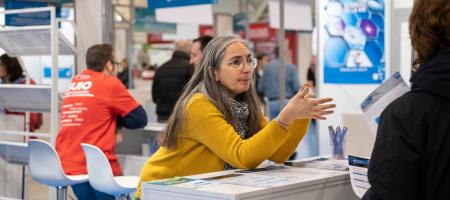 01/09/2023
Dates of trade fairs and open days
Come and talk to the teachers and students of the Faculty of Science! -
Faites de la Science Competition 19/12/2022  19/12/2022
Faites de la Science Competition
The Faculty of Sciences of Aix-Marseille University and the scientific culture unit of Aix-Marseille University organize on Thursday April 13, 2023 the academic stage of the national competition "Faites de la Science". -
Clone of Nobel Day 26/02/2025  26/02/2025
Clone of Nobel Day
On Monday April 28, Aix-Marseille Université's Faculty of Science is organizing Nobel Day, with the exceptional presence of Anne L'Huillier, Professor at the University of Lund (Sweden), winner of the 2023 Nobel Prize in […]


